
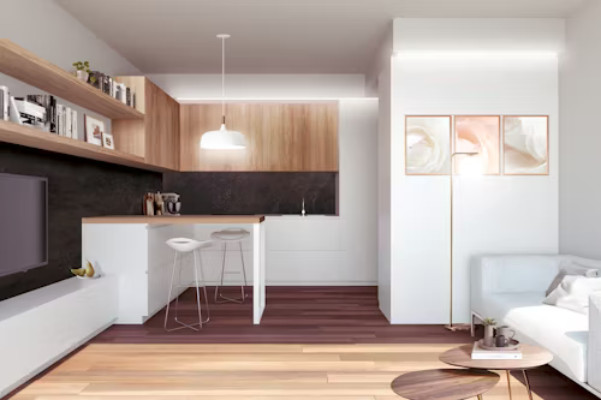
An independent designer visits your home to take precise measurements, reviews your idea book and discusses options for the space. They’ll discuss the pros and cons of choices, the impact on your budget and more.
Pros: Two islands allow you to split up functions like a baking center and eating nook on one and a prep sink and seating on the other. This is great for families who entertain frequently.
Focal Points
When it comes to designing a kitchen, focal points are important to create an aesthetically pleasing space. Focal points are the areas that catch your eye when you enter the room, whether it’s a bold backsplash or unique kitchen island.
A kitchen’s focal point should add an artistic touch to the space without overshadowing or competing with other design features in the room. While it may be tempting to create multiple focal points throughout the space, doing so can cause visual clutter and overwhelm your senses.
A focal point should draw attention to itself by utilizing the principles of emphasis, balance and rhythm. For example, if you want to draw attention to a bold backsplash, use up-lighting to highlight the texture and color of your choice. Likewise, if you have a statement-making range hood, consider using interesting wallpaper or tiling to further enhance its appearance. This will give your kitchen a distinctive style and make it a conversation piece that is sure to impress guests.
Highlight Specific Features
A kitchen needs a focal point to draw the eye and create visual interest. Focal points can be anything from a bold color or eye-catching pattern to a sculptural island, backsplash, hood or accent cabinet door. Focal points are designed to stand out in a room and can make a strong design statement that is on-trend, functional and easy to maintain.
People are increasingly interested in organizing their kitchen to suit their unique lifestyles, which has led to the rise of many specific design features such as cookie sheet and spice racks, utensil organizers, pull-out drawers and more. Ergonomics is another important kitchen design principle that is about arranging work zones to ensure efficient cooking, cleaning and storage.
Incorporating a butler’s pantry is also an excellent way to add a touch of luxury and elegance to a kitchen layout. It serves as a bridge between the kitchen and dining area, making it easier to entertain guests while serving food and drinks. Other kitchen design trends that are currently popular include the open layout that veers away from traditional segregation and the use of natural construction materials like stone and brick.
Utilize Universal Design
Universal design principles can make a kitchen safe and comfortable for all family members. In the hands of a talented designer, these features can also be aesthetically pleasing. From softer more forgiving flooring to adjustable height countertops, there are many ways you can create a kitchen that adapts to everyone’s needs over time.
Make sure all appliances are at a reachable height for everyone in the household, even someone using a wheelchair. A dishwasher tucked beneath a counter can be difficult to reach for those with limited mobility. Having this appliance on either side of the sink or in an island can provide easy accessibility for all users.
Choosing lighter colors for cabinetry and counters is easier on aging eyes. This color scheme also reflects more light and makes the room brighter. Installing touch-activated faucets is helpful for those with decreased dexterity or hand strength and keeps the sink area cleaner from splashes of water. Adding a touch-activated garbage disposal is also a great way to minimize countertop clutter. Lastly, utilizing clear or wire shelving in upper cabinets increases visibility for storage items and helps keep them organized over time.
Create Patterns & Contrast
Using texture, color, and pattern to create an inviting kitchen design requires careful consideration. Contrasting elements can be a great way to draw attention to focal points and add visual interest. However, it’s important to limit these contrasting elements to avoid creating a busy look.
Choosing versatile neutral tones and adding one or two accent colors to larger elements like cabinets, walls, and appliances can create a cohesive, unified design. For example, you could use a bold dark accent color on bar stools and decor accessories to add contrast to the lighter cabinet colors and walls.
Whether you’re designing for yourself, clients, or potential buyers, having the ability to visualize and test out various layouts and materials can save time, money, and stress during a renovation or remodel. While some people still rely on architects and designers for full kitchen designs, there are now many online programs that can help you create detailed floorplans and see what your space will look like before you invest in new products or materials. These programs range from simple to robust with the ability to upload existing blueprints and provide an accurate 3D rendering of your project.
Rhythm
When designing an interior, establishing a rhythm can help create a cohesive and visually appealing design. Rhythm is achieved through various techniques, including repetition, progression, transition, and contrast.
Repetition is accomplished through the reoccurrence of similar lines, shapes, forms, textures, and colors throughout an entire space. This technique provides a clear sense of stability and gives a room an overall unified feel. For example, utilizing repeated framed prints or a matching pattern on cushions and rugs can easily add a subtle rhythm to any room.
Progression involves the gradual movement from one area to another. This could be the size of objects moving from small to large, or the color shifting from light to dark. Using these techniques subtly leads the eye and physical body from one area to the next, creating a natural flow that enhances any kitchen design. Using the right kitchen design software can make it easier to incorporate these techniques into your project. Cedreo is a free-to-use, cloud-based kitchen design tool that allows for collaborative sharing and enables users to visualize their designs with realistic materials and finishes.
Featured Image Source: https://images.unsplash.com/photo-1633429083846-376f1b9737a4